Beat the Summer Heat: Energy Efficient Cellular Shades in Queen Creek
By late afternoon in a Queen Creek summer, the glass in a west-facing great room can feel warm to the touch, and the air conditioning runs to keep up. The right shades slow that heat at the source. Here is where heat really enters, how energy ratings work, when a solar screen beats a cellular shade, and how layering and scheduling keep the house cooler.
Where the Heat Comes In
Glass is the weak spot in an insulated house. Walls and attics are insulated, but sunlight passes straight through a window and turns to heat on floors and furniture. Figures from the U.S. Department of Energy suggest that a home without energy efficient window coverings can lose up to 30 percent of its heating and cooling energy through the windows.
Two kinds of heat, two kinds of fix. Direct sun is radiant heat, and it is best stopped before it reaches the room. Warm glass also passes heat inward by conduction long after the sun moves on, and that is where an insulating layer of trapped air helps most.
Reading the Energy Labels
AERC certification is the independent check. The Attachments Energy Rating Council tests window coverings and labels them with separate ratings for warm and cold climates, so you can compare products on more than marketing. Certified products now include many honeycomb shades, cellular roller shades, Roman shades and solar screen shades.
Many makers share their own testing. Others describe the insulating build of their cellular lines in detail. When we compare options with you, we point out which fabrics carry a rating.
The Most Insulating Cellular Fabrics
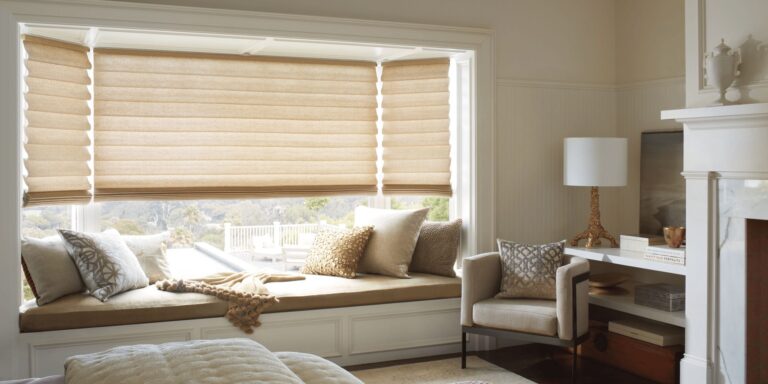
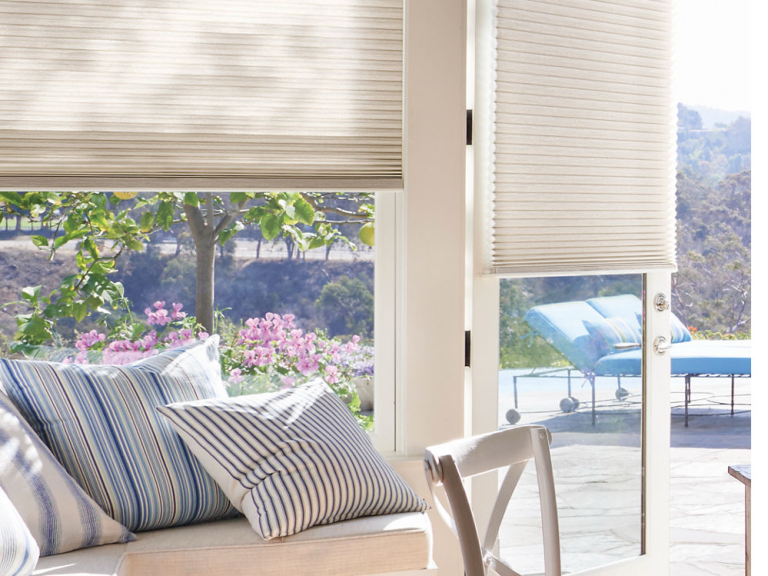
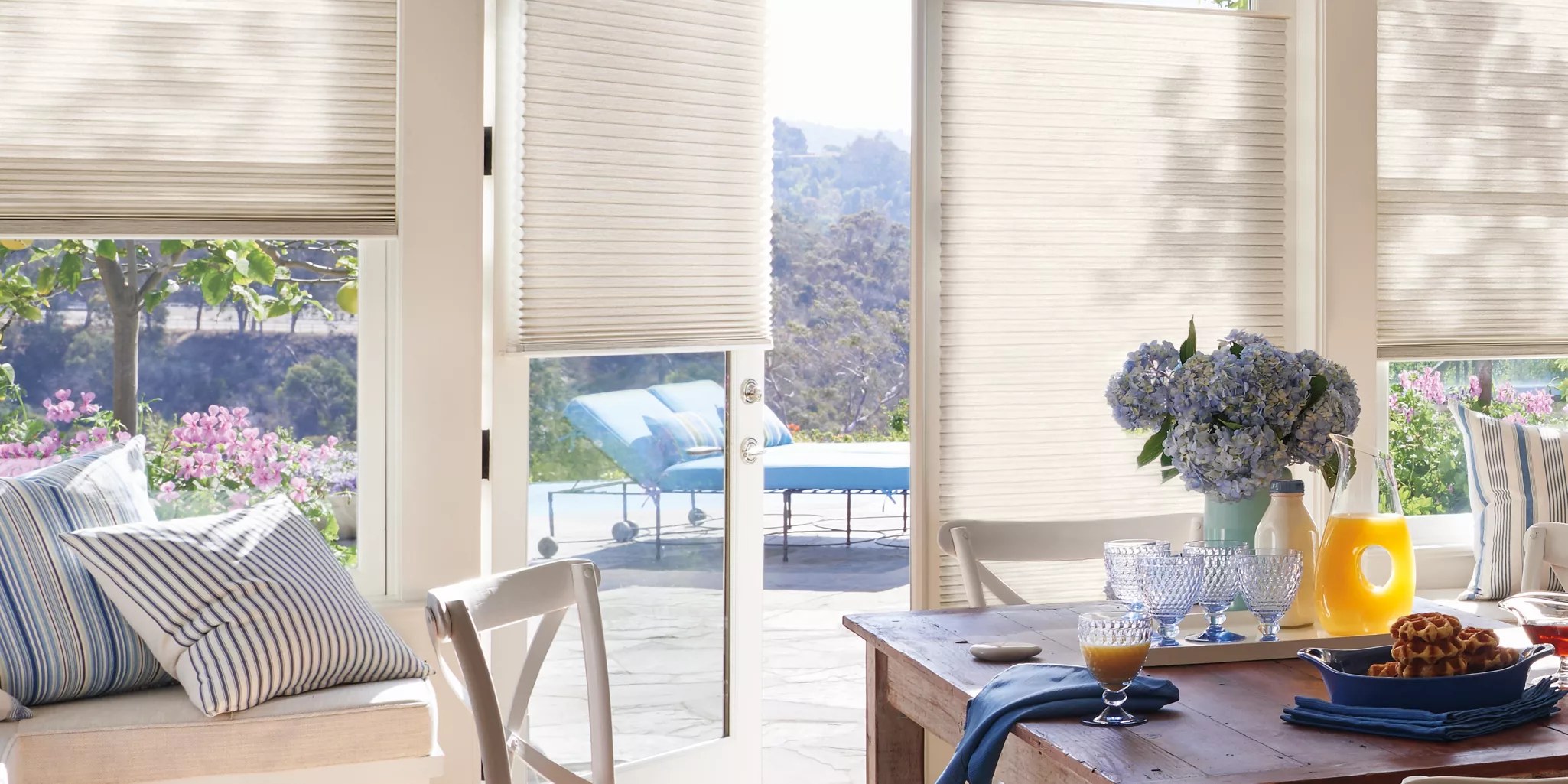
More layers of air mean more resistance to heat. The most energy efficient honeycomb shades add extra fabric layers and air pockets inside each cell. Double cell designs, often in ½ inch and ¾ inch pleats, offer strong energy savings as well.
Some lines add a reflective layer. Some cellular shades place an inner cell inside the pleat, and certain versions use a foil inner cell for the hottest glass. These heavier builds suit west and south walls, while single cell fabric is often plenty elsewhere.
Solar Screens or Cellular Shades
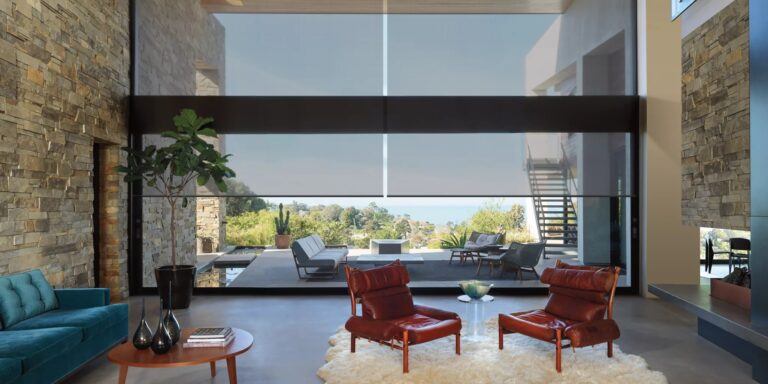
Solar screens stop the sun and keep the view. A screen fabric intercepts much of the sunlight and glare before it warms the room, and you still see out. Solar screen shades can bring real energy savings while blocking the UV that fades floors and furniture.
Openness sets the balance. Screen fabrics are sold by openness, usually from 1 to 10 percent. A 1 percent weave blocks the most UV and a 5 percent weave blocks about 95 percent of UV rays, while 10 percent keeps the clearest view.
Cellular shades win when the view can wait. Once lowered, a cellular shade covers the glass with a pocket of still air, which slows heat moving through warm panes as well as direct sun. In bedrooms and media rooms, that insulation matters more than the view.
Matching Shades to Each Exposure
West glass gets the strongest protection. The low afternoon sun in Queen Creek shines straight into west rooms when it is hottest outside. A low openness screen for a family room you use all evening, or a double cell honeycomb fabric for a bedroom or office, gives those rooms the most relief.
South glass needs steady coverage, east and north can relax. South windows collect sun across the middle of the day, so insulating fabrics pay off there too. East rooms warm up early and cool off by noon, which suits a light filtering single cell or a more open screen, and north windows rarely need more than glare control.
Layering for Extra Comfort
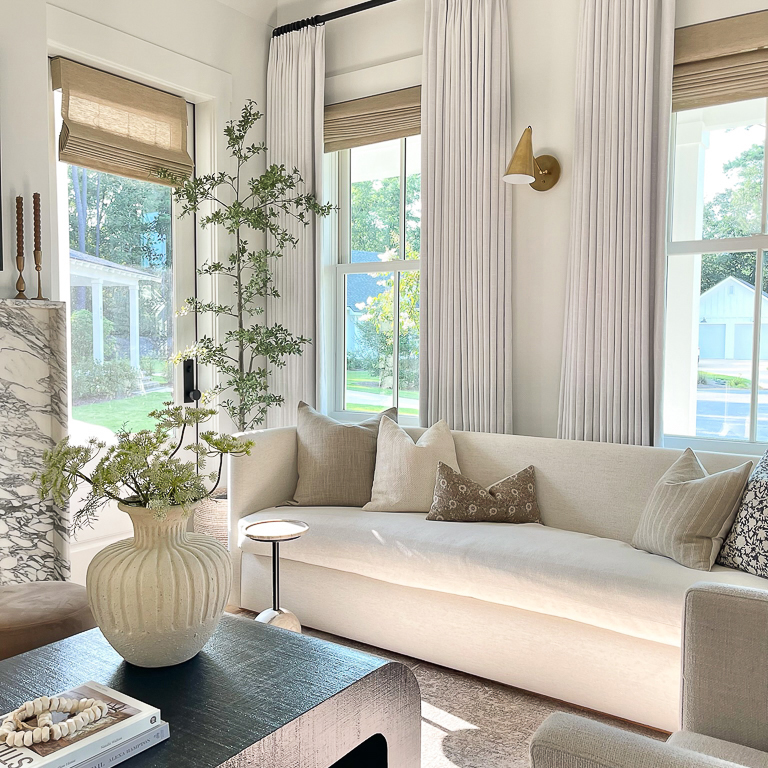
Two treatments on one window beat one. A solar screen paired with a cellular shade lets you keep the view during the day and add insulation at night.
Close the gaps at the edges. Heat and light slip around a shade that sits loose in the frame. A closely sized inside mount and optional side channels help seal the edges so the insulation can do its work.
Letting Schedules Do the Work
Shades only save energy when they are down at the right time. Motorization takes the guesswork out of it. Smart home automation can lower the west side before the afternoon peak, raise shades again at sunset, and with a compatible system respond to temperature so a room closes up once it reaches a set point.
Building Energy Comfort into a New Home
Shades work alongside your new windows. New construction usually comes with low E glass, which helps, but large sliders and two-story windows still let in a great deal of sun. Planning shades with the glass in mind brings comfort from the first summer.
Plan power and depth early. If you want hardwired motors on tall or hard to reach windows, ask your builder about wiring before drywall goes up. We also check frame depth during your consultation, since a snug inside mount is part of what makes an insulating shade perform.
Where It Fits
Newer Queen Creek homes favor desert contemporary, modern farmhouse and Spanish Colonial designs with open great rooms and wide stacking sliders facing the backyard. Energy efficient shades suit all of them, keeping that generous glass comfortable through the long summer.

What We Carry
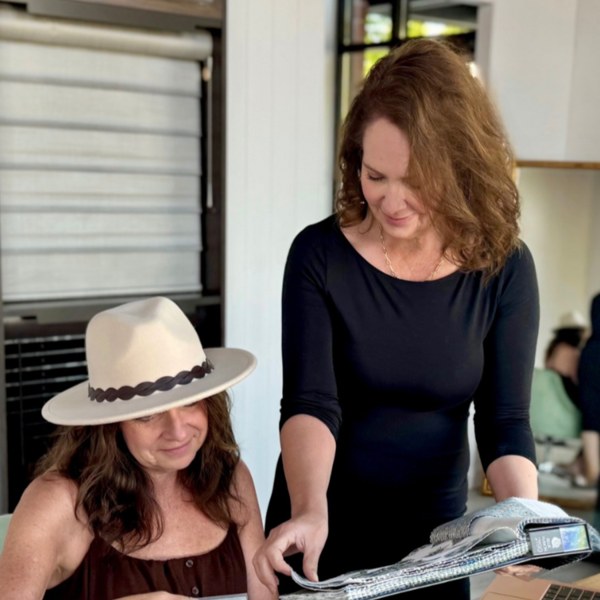
We carry premium, trusted brands and bring samples from several of them to your home so you can compare quality, colors and features side by side. Comparing insulating honeycomb fabrics and solar screen openness on your own glass makes the choice clear.
Energy Efficient Shade Questions
What does an AERC energy rating tell me?
The Attachments Energy Rating Council is an independent group, partly funded by the U.S. Department of Energy, that tests and certifies window coverings for energy performance. Its label rates warm and cold climate performance separately, and in Queen Creek the warm climate rating is the one to compare.
Are solar shades or cellular shades better for keeping heat out?
They solve different problems. A solar screen stops much of the sun and glare before it warms the room while keeping your view, and a cellular shade adds insulation when it is lowered. Many homes use screens on view windows and patio doors and cellular shades in rooms where the view matters less.
Do energy efficient shades help in winter too?
Yes. Open them on sunny winter days to let free solar warmth in, then lower them at night and on cloudy days. The air in the cells helps hold the heat inside on cool desert evenings.
Can motorized shades lower my energy use?
They make good timing automatic. A schedule can close the sunny side of the house before the hottest hours, and smart home automation can work with a compatible system to lower shades when a room reaches a set temperature.
Is measuring and installation part of the price?
Measuring is part of your complimentary consultation. We take measurements while we look at your windows together, so your quote is built around your home. Professional installation is quoted separately and coordinated by our team with our trusted local installer, so your new window coverings go up beautifully and work just right from day one.
Plan a Cooler Summer
If the afternoon sun is heating up your Queen Creek home, our team can help you plan a cooler house. Book a complimentary in-home consultation and we will bring samples to your windows. You can also explore our honeycomb shades or see our window coverings in Queen Creek.
You might also enjoy Window Treatments for Sliding Glass Doors in Queen Creek and Roller Shades in Queen Creek.
By the Pearl & Co Design Team. Pearl & Co is a woman-owned window covering company based in Queen Creek. We help homeowners keep sunny rooms comfortable with blinds, shades and shutters chosen for the way the light falls in their home.